Vainqueur–Victor relationship
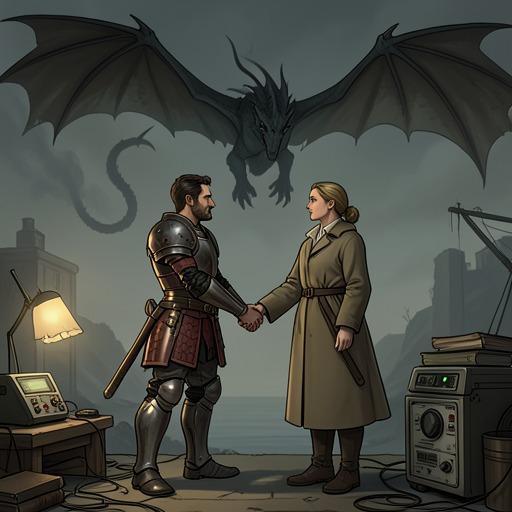
Vainqueur the DragonThe Vainqueur–Victor relationship is the central partnership between Vainqueur Knightsbane and Victor Dalton: a bond that starts in ownership, obligation, and comic exploitation, then gradually acquires the emotional force of friendship. Vainqueur treats Victor as a minion, employee, treasure, and legal instrument, while Victor performs the work that allows the dragon’s ambitions to become institutions. Their relationship is therefore both an unequal master–servant arrangement and the practical engine of Vainqueur’s rise.
Origin and Terms of Service
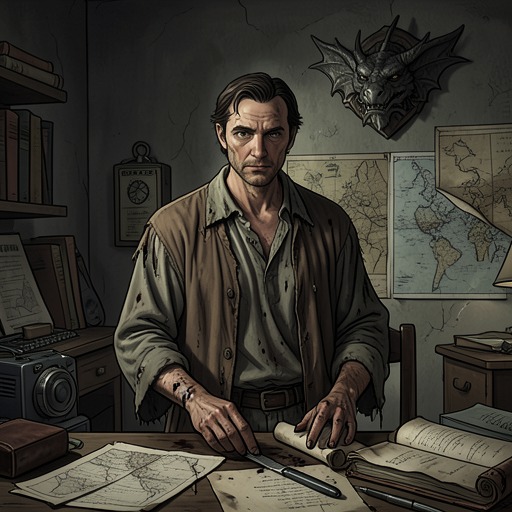
Victor enters the relationship through a life debt rather than free choice. Vainqueur identifies him as a useful manling substitute for the goblins currently unavailable to him, orders him to return the Silver Rapier, and commands him to lead the dragon to the Guildhall so that Vainqueur can inspect a request personally. The arrangement is then stated with characteristic bluntness: Victor will be Vainqueur’s new minion until he repays the debt owed for his life. Victor considers himself wholly unsuited to the role, but Vainqueur answers that he is a dragon and that Victor is therefore a minion. The exchange establishes the relationship’s founding contradiction: Victor experiences the appointment as an honor he does not deserve, while Vainqueur experiences it as an obvious extension of draconic authority.
The bond is never limited to battlefield service. When Vainqueur encounters a pile of paperwork, he formally promotes Victor to minion chief of staff and living signature, making him responsible for managing documents on the dragon’s behalf. The promotion is framed as a great responsibility and accompanied by confidence that Victor will manage it, but Victor privately suspects that the new office will bring no pay. The Class System nevertheless recognizes the appointment: by becoming the chief enforcer of a mighty dragon, Victor gains a level in the Monster Squire Class. The relationship thus converts coercion into an institutional role, giving Victor status even as it expands his obligations.
Labor, Hierarchy, and Mutual Dependence
The minion protocol places Victor at the summit of Vainqueur’s internal hierarchy. Red Ranger describes the chief of staff as the highest echelon of the minion pecking order and the ultimate honor a monster lord can bestow: an enforcer combining strength, cunning, and loyalty. Victor modestly objects that his loyalty is being exaggerated, while Vainqueur insists that he underestimates his place in the food chain. The dragon ranks Victor directly beneath himself in preciousness, even above princesses. This language is comic because Vainqueur speaks of affection through hoard value and hierarchy, but it is also precise: Victor is becoming indispensable.
Vainqueur’s dependence becomes clearest when he gives Victor work that the dragon himself considers beneath his dignity. After Vainqueur decides that discarded meat, monster parts, and corpses should generate income rather than simply be left for animals, he orders Victor to open a shop selling the waste. Victor must also prepare Vainqueur’s class progression and train the Kobold Rangers. The chief of staff’s office therefore spans commerce, military education, paperwork, and personal advancement. Victor’s short nods and silent struggle under the accumulated duties make the imbalance visible: Vainqueur claims the authority and rewards, while Victor supplies the continuous labor that keeps the enterprise functioning.
The same pattern governs their material exchanges. Vainqueur agrees to loan Victor items that the dragon cannot wear, presenting the concession as limitless generosity and waiting for thanks. Later, after Victor helps sell corpses to a necromancer for postmortem slave labor, Vainqueur pays him eight gold coins rather than the one-tenth share Victor expected, exploiting the ambiguity in the promised fee. Yet Vainqueur also protects Victor’s practical interests. He keeps the weak manling safe until a larger minion stable can be rebuilt, and he permits Victor to use valuable equipment because Victor has proved reliable. Their economy is therefore neither simple affection nor simple wage labor: every gift creates status and debt, but the dragon’s hoarding logic repeatedly expresses care through protection and controlled access to resources.
Chief of Staff and Grand Dragon Vizier
Victor’s responsibilities expand as Vainqueur’s projects become larger. During the campaign against Furibon, Victor helps organize recruitment for war. Vainqueur refuses to limit the army to one species, and Victor reports one hundred Kobold Rangers applicants alongside a troll, a dryad, and a golem with class levels above twenty. Victor is the person who converts the dragon’s grand declarations into numbers, applicants, orders, and logistics. His role is not decorative; he makes Vainqueur’s claims operational.
The climax of the War of the Hoard gives the relationship its clearest protective image. Furibon destroys much of the throne room and binds Victor in chains, but Vainqueur reveals himself in full draconic glory, destroys the lich, and bites through the chains holding his chief of staff. His first concern after defeating the enemy is whether Victor is safe. Vainqueur then calls Victor the crown jewel of his hoard, the most precious asset and most loyal servant, and declares that he will never let him go. The statement retains the language of possession, but its emotional meaning has shifted. Victor is no longer merely a replaceable minion; he is the treasure whose loss would wound the dragon personally.
After Vainqueur becomes Emperor, the hierarchy is formalized again. Vainqueur says that he dislikes spreading his hoard beyond his sight and therefore allows the Kobold Rangers to borrow weapons only temporarily. Victor alone is considered worthy to wield the dragon’s sacred treasures in battle because Vainqueur trusts him not to lose them. The distinction matters: Victor receives not just authority but privileged access to the hoard itself. His reliability has become the basis of military trust, while Vainqueur’s reluctance to lend anything reveals how exceptional Victor’s position is.
Vainqueur’s third commandment finally names the division of labor that has governed the partnership from the beginning: Victor must do the non-dragon thing. Vainqueur claims that he has better uses for his time, such as counting new coins and killing liches, and therefore promotes Victor to Grand Dragon Vizier and Doer of the Thing. Victor recognizes the arrangement accurately: he will continue doing the boring work while Vainqueur enjoys the rewards. The title is both a joke and a constitutional principle. Vainqueur’s rule depends on Victor’s administration, while Victor’s elevated position depends on accepting that the dragon’s glory will remain the visible face of their shared achievements.
Shared Institutions and Public Partnership
The relationship extends beyond private orders into the institutions built around Vainqueur. Victor’s administrative labor helps sustain the dragon’s commercial and military projects, including the opening of Nethermart, the first fiendish magic-item shop in Outremonde. The shop is presented publicly as a venture open to monsters and mortals, offering credit secured by souls and weapons at a discount in anticipation of war with Maure. Although the opening scene places Victor among the wider network of monsters and officials rather than isolating him beside Vainqueur, it shows the chief of staff’s work continuing inside a commercial structure whose scale exceeds the original minion arrangement.
Victor also remains a visible representative of Vainqueur’s authority during public celebrations and crises. After Bragging Day, when the surrounding area resembles the aftermath of a volcanic disaster, Vainqueur calls the Kobold Rangers, gnolls, mimics, and other servants to him and asks immediately where Victor is. The question reveals Victor’s operational importance: even after a spectacle centered on Vainqueur, the dragon’s first administrative concern is locating the person who can help restore order. Victor is the bridge between imperial display and ordinary management.
The relationship is also marked by recurring language of treasure. Vainqueur’s rescue of Victor during the War of the Hoard establishes him as the crown jewel of the hoard; later, Vainqueur explains that without Victor he would never have gathered the hoard in the first place. This reverses the apparent direction of dependence. Victor’s work has enabled Vainqueur to accumulate wealth, territory, followers, and prestige, so the chief of staff is not simply one possession among many. He is the condition that made the collection possible.
Friendship, Debt, and the Refusal to Separate
The decisive transformation occurs after Victor’s death and revival. When Victor asks why Vainqueur is so distressed, the dragon can think only of the question because Bragging Day has lost its meaning without him. Vainqueur forces himself to resume a proud draconic expression, but admits that Victor was worth more than the hoard itself: without Victor, there was nothing worth bragging about. The value system of possession reaches its emotional limit here. Vainqueur does not merely miss a servant who performed useful tasks; he loses the person who gave his victories meaning.
Victor responds by recognizing that he would never leave Vainqueur, even if released from service. He tells the dragon that Vainqueur has become more than a master and has become a friend. Victor defines friendship as remaining with someone no matter what, including after the formal obligation of service has ended. This is the relationship’s clearest change in status. The original bond was enforced by a life debt; the later bond is sustained by a freely chosen commitment. Victor’s decision does not erase the hierarchy, but it changes its emotional foundation from compulsion to loyalty.
Vainqueur immediately folds the new intimacy back into his old language of debt. He forbids Victor from sleeping until he reimburses an enormous sum of 12,545,133 gold coins, adding that amount to the life debt incurred through Vainqueur’s raising of his prized chief of staff. Victor compares the debt to his student loan, yet answers that he will find a way to repay it and feels strangely at peace. The joke preserves the master–minion structure while showing that Victor no longer experiences it as an intolerable trap. He has chosen the relationship even when its terms remain absurdly exploitative.
Their future is consequently imagined as joint labor rather than release. Victor will work until both he and Vainqueur become gods, and the pair will then demand reimbursement for the expensive revival service. Vainqueur’s possessiveness, Victor’s acceptance, and their shared plan converge in this ending. The relationship remains unequal, transactional, and comic, but it is no longer merely transactional. Protection, administrative dependence, gratitude, grief, and chosen permanence have made the dragon and his former manling into partners whose identities are bound together.
Narrative Significance
The Vainqueur–Victor relationship gives institutional form to the book’s recurring collision between heroic fantasy and management comedy. Vainqueur embodies overwhelming power, appetite, pride, and hoarding; Victor embodies paperwork, recruitment, contracts, commerce, training, and the unglamorous labor of making power durable. Their partnership repeatedly turns a dragon’s impulse into an organization. The master’s declarations may dominate the public scene, but the chief of staff’s labor determines whether those declarations become armies, shops, ceremonies, or an empire.
The bond also makes the book’s language of value unstable in productive ways. Victor is called a minion, an enforcer, a signature, a chief of staff, a grand vizier, a servant, a friend, and a crown jewel. Each title adds a different truth without canceling the others. Vainqueur continues to claim ownership and calculate debts, yet he also protects Victor, trusts him with sacred treasures, and cannot imagine Bragging Day without him. Victor continues to complain about unpaid labor and impossible obligations, yet he remains by choice. The relationship’s decisive significance lies in that unresolved mixture: domination becomes dependence, debt becomes devotion, and a dragon’s hoard ultimately proves unable to contain the human being who made it possible.